YouTube ad formats Google Ads
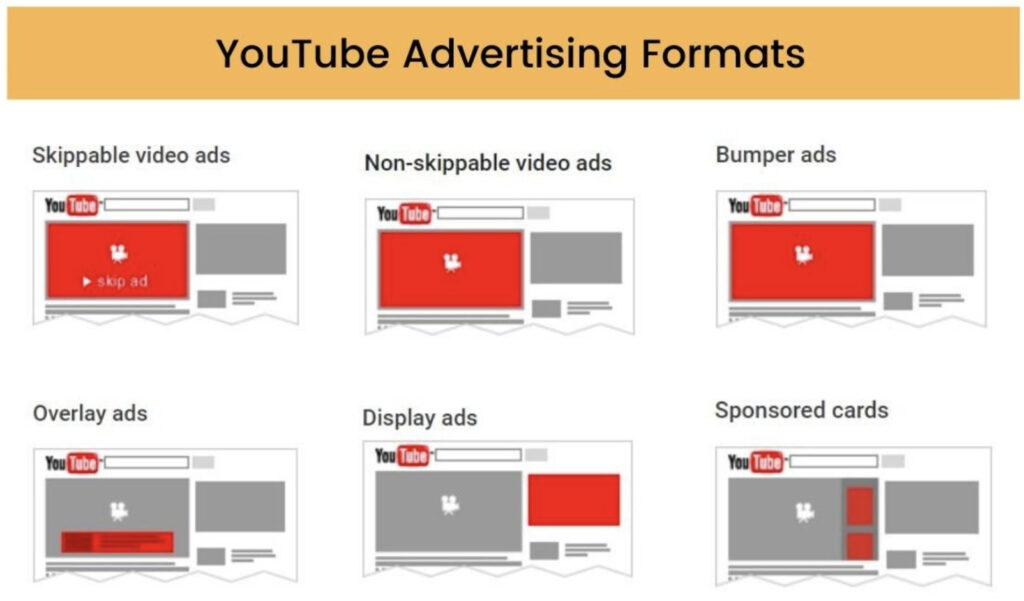
YouTube is a video platform with a tightly organized advertising system directly linked to Google Ads. When deploying ads on YouTube, choosing the appropriate format determines how the content appears, when it reaches viewers, and their level of engagement. YouTube ad formats Google Ads are designed to meet different objectives, from increasing awareness and maintaining impression frequency to driving specific actions. Each format comes with its own distribution mechanism, technical requirements, and cost calculation method, requiring advertisers to carefully consider them before launch. In a context where the budget needs to be used effectively, YouTube ad formats Google Ads are not just display options but also tools to shape the viewing experience and the memorability of the brand’s message in every campaign.
How Google Organizes the Video Advertising System on YouTube
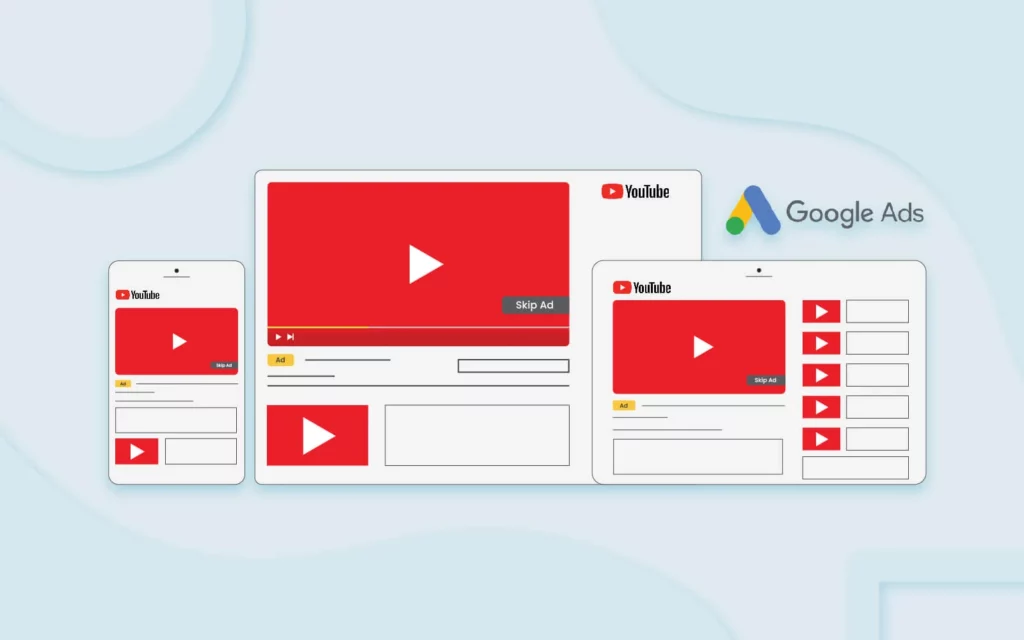
The video advertising system on YouTube is built as a direct extension of Google Ads, where every distribution decision is based on data and predefined rules. Instead of operating independently, YouTube serves as the display repository, while Google Ads is the coordination center. This organization ensures that video ads do not appear based solely on random playback but are orchestrated according to context, objective, and viewer reception capability.
The Link Between YouTube and Google Ads
YouTube does not have a separate advertising system. All video campaigns are set up, managed, and measured through Google Ads. When an advertiser creates a video campaign, they select an objective such as brand awareness, consideration, or conversion. Based on this objective, Google Ads activates the appropriate formats and connects directly with the YouTube content library for distribution. A Brand Awareness campaign using non-skippable ad formats will be priced based on CPM, typically ranging from 20,000 to 80,000 VND per 1,000 impressions depending on the market. Conversely, a TrueView campaign can be priced by CPV, incurring costs only when the viewer watches for 30 seconds or interacts. Centralized management within Google Ads allows the advertiser to track all metrics, such as impressions, view rate, average watch time, and cost per result, within a single interface.
Distribution Based on Display Context
Video ad distribution on YouTube relies not on a single factor but on a combination of display context and campaign objective. Context includes the type of video content, channel topic, viewing time, and device used. The campaign objective determines where and in what form the ad will primarily appear. For instance, with a broad reach objective, 6-second bumper ads are often distributed before large-volume entertainment videos on mobile devices and TV. For a consideration objective, the ad might appear in YouTube search results or alongside related videos, where the viewer is proactively exploring content. Google uses quality thresholds such as completion rate, content relevance, and impression frequency to adjust the distribution pace. If an ad achieves a view rate over 70 percent in a non-skippable format, the system tends to expand the display within the same context.
Behavioral Data Determines Placement
Behavioral data is the most important layer in determining ad placement. Google analyzes viewing history, interaction time, the type of content users typically follow, and their previous response to ads. These signals are aggregated per viewing session to determine the likelihood of ad reception at a specific time. Users who frequently watch long videos on TV in the evening are highly likely to be served non-skippable ads or TrueView ads longer than 15 seconds. Conversely, users who quickly scroll on mobile devices often receive short 6-second ads or skippable ads. Additionally, the system also considers exposure frequency. If a person has seen the same ad 3 times in 24 hours, Google may deprioritize the display to prevent ad fatigue. This use of data helps the system balance campaign effectiveness and viewer experience, ensuring the ad appears at the position with the highest probability of impact.
YouTube Ad Formats Google Ads in Practical Implementation
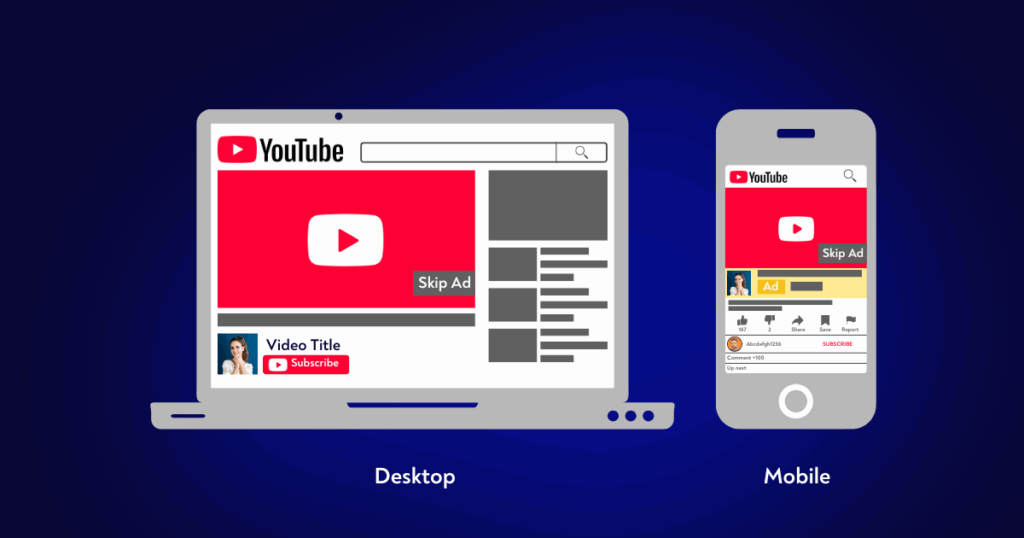
During the video campaign deployment process, Google does not distribute ads randomly but relies on specific formats, tied to clear display placements, viewing behavior, and technical requirements. Each ad format on YouTube is designed to solve a different problem, from proactive reach and expansion of coverage to maintaining stable memorability. A clear understanding of the implementation characteristics helps advertisers better control performance, avoid budget waste, and limit technical risks during the ad run.
Ads Appearing Before and During the Video
This is the most common group of formats, often called in-stream ads, appearing before the video starts or interspersed within the content being watched. Viewers access the ad in a concentrated context, so the level of attention is usually higher than in other placements. Common formats in this group include skippable ads after 5 seconds and non-skippable ads with a maximum duration of 15 seconds in most markets. In terms of implementation, skippable ads are typically priced by CPV, costing money only when the viewer watches for a minimum of 30 seconds or interacts. Meanwhile, non-skippable ads are billed by CPM, for example, a price range of 120,000 to 250,000 VND per 1,000 impressions, depending on the competition level. This format requires the video to meet a minimum resolution standard of 720p, clear audio, and compliance with content policies. Since viewers cannot skip, the content needs to be tightly organized from the first 3 seconds to avoid causing annoyance.
Ads Displayed Outside the Main Viewing Stream
This group of formats does not appear directly in the video player but is shown in discovery areas such as the homepage, suggested lists, or search results. In-feed video ads are a typical example, where users proactively click to watch the ad content. This creates a large difference in the quality of views, as the viewer has the intent to receive the content before starting. Technically, in-feed ads require optimization of the thumbnail, title, and description. The title is usually limited to about 25 characters displayed on mobile, with a brief description to support the click decision. The cost is calculated by target CPV or CPM, with the common CPV ranging from 300 to 1,500 VND per view depending on the market. Since viewing is not mandatory, this format is suitable for more in-depth content, with a duration from 30 seconds to 2 minutes, serving consideration or research objectives.
Formats for Quick Reach and Short-Term Memorability
With the goal of fast coverage and repeated touchpoints, Google offers short video formats like 6-second bumper ads. This is a non-skippable format, designed to convey a single message in a very short time. Thanks to the limited duration, bumper ads often achieve high frequency and are suitable for brand awareness campaigns. The cost of this format is calculated by CPM, usually lower than longer non-skippable ads. Bumper CPM can range from 60,000 to 150,000 VND depending on the time. Regarding technical specifications, the video needs to be edited according to principles of simplicity, large text, high contrast, and an early logo appearance. Common aspect ratios include 16:9 for TV, 1:1 for feed, and 9:16 for mobile devices, with corresponding resolutions from 1080 x 1080 to 1080 x 1920 pixels.
Technical Constraints Accompanying Each Format
Every YouTube ad formats Google Ads is accompanied by mandatory technical requirements to ensure distribution capability. Videos must be uploaded to YouTube in public or unlisted mode, allow embedding, and comply with Google’s advertising policies. The common codec is H.264, MP4 format, standard aspect ratio, and appropriate file size to avoid slow loading errors. Furthermore, factors such as the ratio of text on the screen, volume level, content safety, and message consistency all affect distribution capability. For instance, videos with overly quiet audio or blurry visuals are often rated poorly for experience, leading to increased costs or slow distribution. Full compliance with these technical constraints not only helps the ad get approved faster but also forms the basis for the campaign to operate stably throughout its runtime.
Contact Info
Are you in need of Facebook advertising or need to rent a quality Facebook advertising account? Don’t worry! Rentads is a unit specializing in providing reputable Facebook accounts, as well as direct advertising support. Provides all types of advertising accounts such as google account for rent to help you reach and create fast conversions.
Frequently Asked Questions
Non-skippable formats, especially bumper ads, often face this risk if the message is not clear enough. CPM may be low, impressions high, but if the content is spread thin or lacks an identifying point, the effectiveness of memorability and impact on behavior is almost zero.
The choice should not be based on intuition but on the main objective. If fast recognition is needed, bumper ads are a reasonable choice. If quality views are needed for in-depth measurement, skippable in-stream or in-feed ads will be more suitable, even though the cost per view is often higher.

