Youtube bumper ads duration
Short-form advertising length on YouTube is increasingly becoming a strategic choice rather than a temporary solution. As viewers tend to scroll quickly and skip long content, ads lasting only a few seconds have the opportunity to appear at the right time and the right viewing pace. With the youtube bumper ads duration, the challenge lies not in how much can be said, but in choosing the right information to appear and arranging it in a logical order. Every frame must have a reason to exist, and every movement must serve the goal of brand memorability or recognition. If implemented correctly, short ads not only save distribution costs but also create a distinct impression within a very limited time.
Youtube bumper ads duration and the Challenge of Message Selection
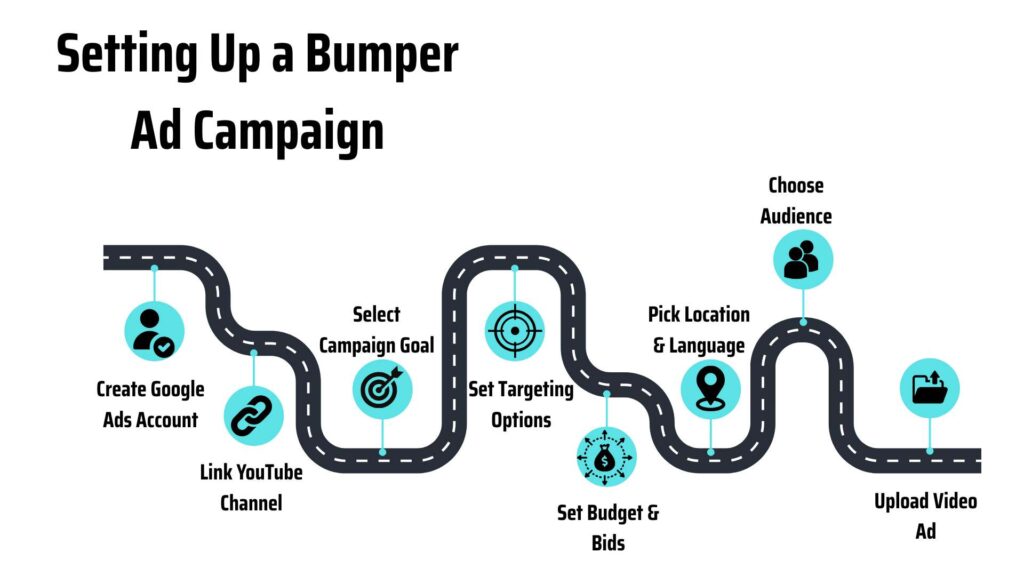
With the youtube bumper ads duration fixed at 6 seconds, advertisers are forced to abandon traditional storytelling mindsets in favor of direct and condensed visual impact. The success of this format does not stem from randomly cropping long videos, but rather from the ability to coordinate information pacing to match the fast content consumption behavior of mobile users. To achieve optimal recall, one must carefully consider aspects of time pressure, information hierarchy, and creative simplification.
Delivery Pressure Under Compressed Screen Time
When display time is tightly compressed into 6 seconds, every redundant element becomes a barrier to the connection between the brand and the viewer. The pressure lies in performing two tasks simultaneously: capturing attention from the very first second and leaving a clear brand mark before the ad ends. In this context, creators have no time for lengthy introductions or elaborate background settings. Every passing second carries immense economic weight, forcing content to get straight to the point or present an immediate solution, ensuring that even if viewers are not fully focused, they still recognize the brand’s presence.
Information Hierarchy
The logical order of components within the video plays a decisive role in whether information is stored by the brain. Unlike long-form formats where a logo often appears at the end like a signature, brand identity visuals should appear early within the first 2 seconds to ensure connectivity. Arranging information in the order of “Problem – Solution – Brand” or “Desire – Brand – Action” creates a coherent thought flow for the viewer. If this order is disrupted or spread too thin, memorability will be diluted, leaving viewers at the end of the clip unable to identify the subject of the message.
The Trade-off Between Visuals and Messaging
Every short video campaign is a process of decisive trade-offs between artistic aesthetics and communication effectiveness. Due to time constraints, advertisers must often sacrifice decorative details or secondary messages to focus entirely on a single iconic image. This trade-off requires sharp visual thinking: the image must be strong enough to replace words, and the words (if any) must be short enough not to obscure the image. This balance ensures that the ad does not become a mess of characters and motion, but rather a condensed slice of high visual weight.
Necessary Levels of Simplification
The ultimate principle in operating short ads is absolute simplification. When forced to process too much information in 6 seconds, the human brain tends to refuse processing, leading to cognitive overload. To avoid this risk, content must be refined to the minimalist level: one dominant color, a single text message, and one clear action. Simplification does not mean poverty of content; it is the distillation of the brand’s essence to create a powerful communication impulse, helping users easily absorb the message without excessive cognitive effort.
When a single message delivers higher efficiency than multiple layers of meaning, advertisers will realize that the true power of short videos lies in focus. Instead of trying to communicate multiple product benefits at once, delving deep into a single emotional touchpoint or a superior feature will create a more profound impact, turning 6 brief seconds into a powerful brand lever in the customer’s mind.
How Brands Leverage Short Timeframes to Build Recognition
Building brand identity within a compressed timeframe is not about trying to shrink a long story, but the art of performing signature symbols directly. Every factor, from color and motion to the appearance of the subject, must be calculated to trigger the brain’s memory zone immediately.
The Role of Visual Elements in the First Few Seconds
Visual elements in the first 2 seconds act as the “hook” that determines whether viewers receive the message or just stare at the screen unconsciously. During this period, core brand colors and high-contrast images must be prioritized to create a positive visual shock. A sharp opening frame focused on a single subject helps minimize distraction, helping users define the context instantly. If the visual element is not strong enough to impress during this “golden” stage, the remaining seconds of the ad lose their delivery value, as the viewer’s brain automatically switches to a state of waiting for the skip or end button.
Brand Recognition Levels
Brand recognition in short formats is not formed through rational persuasion but through conditioned reflexes and visual prompts. As users are continuously exposed to 6-second information slices, their minds gradually link specific traits—such as a signature sound, color palette, or graphic style—to a particular brand. This process happens subconsciously; viewers may not remember detailed content, but they will remember the “feeling” and “presence” of the brand. Through repetition, these fleeting impressions accumulate into a solid cognitive zone, helping the brand stay on the priority list when customers develop an actual need.
When to Prioritize the Logo vs. the Product
Choosing the central subject between the logo and the product image depends entirely on the strategic goal of the campaign phase. If the brand has a solid position and the goal is to maintain reminder frequency, the logo and brand assets should be prioritized in the center to trigger instant recall. Conversely, for new products or brands needing to create demand, the product image in-use should be placed first so viewers understand the function in the blink of an eye. This flexibility in prioritization ensures that the 6 precious seconds are not wasted on information that the target audience already knows or isn’t ready to receive.
Visual Consistency to Shorten Recognition Time
Consistency is the key to shortening the “latency” in customer perception. When a brand maintains uniform identity elements—from fonts and color filters to frame layout—across all formats, viewers will recognize them at the very first second of the ad. This consistency eliminates the need to explain “who I am,” allowing the entire remaining time to be dedicated to delivering the core message or creating emotion. Even a small change in visual style can cause users to lose a few seconds to re-orient, which is an unacceptable waste in a 6-second ad.
Pacing and Brand Perception
Pacing is the heartbeat of a short video, directly shaping the personality and emotion of the brand in the eyes of the viewer. A fast, energetic pace evokes dynamism, youth, and modernity, suitable for FMCG or technology sectors. Meanwhile, smooth shots with slower transitions create a sense of luxury, reliability, and sophistication, often seen in high-end product lines. Coordinating this rhythm not only helps control the flow of information but is also an invisible tool to etch the brand identity into the customer’s mind, turning a brief advertisement into a complete emotional experience.
Contact Info
You need a Facebook advertising account but don’t know any reputable provider. Coming to Rentads is where you will experience what you need… prestige, high trust, and professional consulting and service support for customers.
Contact Info
You need a Facebook advertising account but don’t know any reputable provider. Coming to Rentads is where you will experience what you need google ads agency account for rent prestige, high trust, and professional consulting and service support for customers.
Frequently Asked Questions
Don’t try to do both. Within the youtube bumper ads duration, you should choose a single goal. To create emotion, focus on a facial expression or a funny/surprising action. To present a product, use a close-up shot of it in action. The golden rule is: 1 video = 1 message = 1 single emotion.
This is often due to the bidding algorithm prioritizing efficiency. Because short ads have a completion rate of nearly 100% and are unskippable, the system evaluates this as a “premium” position that ensures the message reaches the user. To optimize CPM, you need to improve video quality scores and target your audience more precisely rather than broadly.

