Youtube overlay ads cost
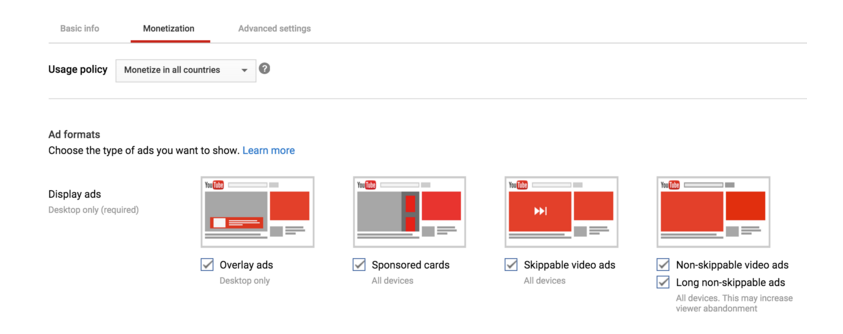
Youtube overlay ads cost is a factor that many advertisers consider when choosing this format for their video strategies. Although they do not occupy the entire screen, overlay ads still appear directly on top of the content being viewed; therefore, effectiveness lies not just in the price but also in the display context and the relevance of the message. When evaluating youtube overlay ads cost, it is necessary to look beyond CPC or CPM figures and consider the ability to reach users at the right time, the frequency of repetition, and the level of disruption to the viewer experience. If set up without control, costs can rise quickly while the value returned remains disproportionate. Conversely, by understanding the billing mechanisms and distribution conditions, this format can still play an effective supporting role in brand awareness or recall campaigns.
YouTube Overlay Ads Cost: Brand Awareness Video Strategy
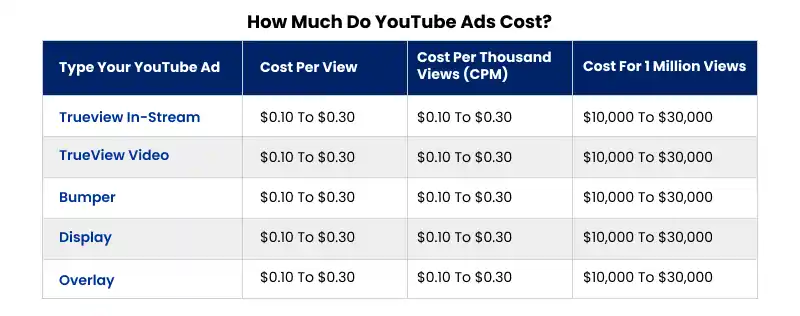
Youtube overlay ads cost does not exist as a fixed rate but is formed based on multiple variables simultaneously. When implemented for brand awareness, the platform prioritizes stable visibility and repetitive appearance within a natural viewing context. Therefore, costs are typically calculated based on CPV or CPM, depending on how the advertiser chooses to measure value. For short formats like Bumper Ads, costs are usually lower due to the 6-second duration and a goal focused on quick recall. Conversely, premium formats like Masthead Ads on the YouTube homepage incur very high costs, potentially reaching tens of millions of VND per day, in exchange for superior reach and prominence.
Factors Directly Impacting Costs
Youtube overlay ads cost is heavily influenced by the chosen ad format. 6-second Bumper Ads typically have a lower CPM as they do not require deep interaction, while Skippable TrueView In-Stream ads are more flexible regarding CPV since charges only apply when viewers reach a valid viewing threshold.
The bidding strategy also determines the actual cost. When choosing CPV, the budget is spent based on the number of eligible views, suitable for controlling the cost per reach. With CPM, the cost is tied directly to the number of impressions, ideal for branding campaigns requiring broad coverage. Additionally, campaign objectives guide the algorithm; awareness-focused campaigns prioritize reach, while action-driven campaigns face higher price competition. Target audience and industry are also vital factors, as sectors like finance, education, or real estate often see significant cost increases due to high competition, especially in major urban areas.
Reference Costs by Format
In the CPV model, common costs range from a few cents per view, depending on the market and competition. For CPM, rates are usually calculated in USD per 1,000 impressions, where Bumper Ads have a significantly lower CPM compared to premium formats. Masthead Ads fall into a special cost category, usually sold by fixed days rather than bidding, requiring high budgets suitable for major brands or critical launch campaigns.
How to Calculate YouTube Overlay Ads Cost
When applying the CPV model, the cost formula is quite intuitive. This helps advertisers control the budget closely based on the number of people who actually watch the ad.
- Total Cost = Number of Views × CPV Rate.
With the CPM model, the cost is calculated as:
- Total Cost = (Number of Impressions / 1,000) × CPM Rate.
This format is suitable when the goal is to increase coverage and frequency rather than focusing on detailed viewing behavior. Choosing between CPV and CPM is not just a cost decision but reflects how a brand intends to measure effectiveness and the role of overlay ads within the overall brand awareness video strategy.
Evaluating Overlay Costs within the Total Video Campaign
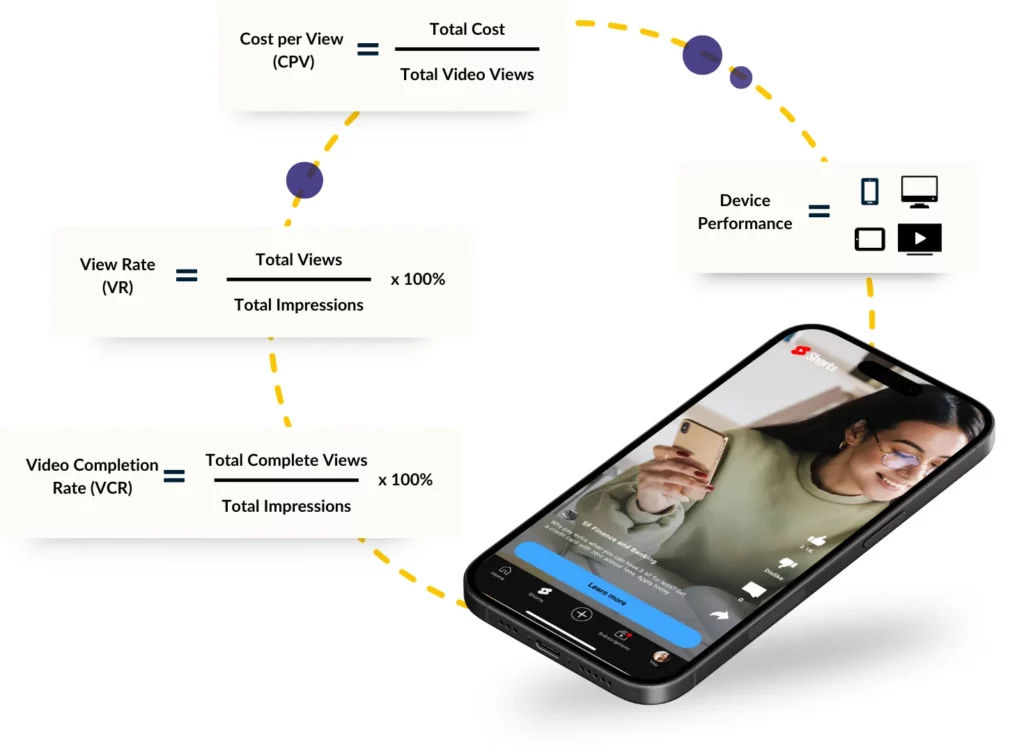
When placing overlay ads into an overall video campaign, costs should not be viewed in isolation by clicks or impressions. The true value of this format lies in its role in supporting awareness, recall, and maintaining brand presence while users consume content. Therefore, evaluating costs must be linked to distribution context, access device, and communication goals at each stage.
Cost Differences Between Devices and Viewing Positions
Youtube overlay ads cost often fluctuates significantly between mobile, desktop, and TV. On mobile, limited display space makes overlays more noticeable, while high competition often leads to slightly higher unit prices. Conversely, on desktop, overlays tend to be less disruptive but depend heavily on content browsing habits, which can lead to lower costs but inconsistent effectiveness. The position within the video also creates a significant difference. Overlays appearing in long-form videos with stable content often maintain more reasonable costs compared to short videos or fast-paced edits where viewers are easily distracted.
When Overlays Provide Good Cost-Effectiveness
Overlay ads demonstrate the best cost-efficiency when used as a supplementary touchpoint rather than a primary conversion channel. In campaigns focused on awareness or recall, overlays help maintain frequency at a lower cost than full-screen video ads. Particularly, when the original video content is highly relevant to the ad message, overlays are accepted more naturally, improving engagement rates without spiking costs. Additionally, overlays are suitable for stages requiring extended brand presence when the budget does not allow for a major expansion into long-form video formats.
Cases Where Costs Increase Without Proportionate Value
Overlay costs can rise quickly in campaigns lacking contextual control. When ads appear on videos with irrelevant topics or viewing behaviors, users tend to ignore or close the overlay immediately, meaning costs are still incurred but the recorded value is very low. Another risk lies in frequency abuse. When overlays appear too densely, especially to the same audience group, annoyance levels rise, leading to diminishing effectiveness while costs remain the same or increase. In these cases, overlays not only fail to support the campaign but also weaken the overall viewer experience.
Comparing Overlay Cost Roles with Other Video Formats
Compared to in-stream or non-skippable ads, overlays have a lower cost per impression but offer less deep impact. Overlays are not suitable for delivering complex messages or building long-term brand stories. However, when placed alongside expensive formats like non-skippable pre-rolls, overlays play a budget-saving role to maintain continuous presence. In a total campaign, overlays should be viewed as a baseline cost layer, helping to balance the budget and supplement reach rather than competing directly with primary video formats for conversion efficiency.
Contact Info
We provide services google account for rent nationwide, and with a team of experienced and qualified staff who both support advertising and can directly perform Facebook advertising if you need. Contact us via phone number.
Frequently Asked Questions
Overlay ads are non-intrusive and appear at the bottom of the video, making them easy for viewers to “ignore” or close immediately. Google’s bidding system recognizes this as a lower-attention position, so CPM rates are usually very cheap. However, since users are focused on the main video content, they rarely click on a small banner icon, resulting in low CTR. This format is most effective for maintaining brand presence rather than direct conversion goals.
The billing mechanism for Overlay Ads is primarily based on impressions. If the system has displayed the banner on the screen, you will be charged regardless of whether the user clicks the “X” to close it afterward. To avoid waste, overlay content must be extremely concise (logo and core message must appear instantly). If a user closes the ad, at least your brand managed to appear in their sight for the first 1-2 seconds—that is the minimum value you receive for the cost spent.

