Placement targeting Google Display Network
Placement targeting Google Display Network provides the ability to finely control the websites, apps, and videos where ads appear. Using placement targeting Google Display Network correctly helps advertisers precisely reach potential audience groups, optimize budgets, and improve campaign performance. When the appropriate placements are identified, the ads integrate naturally with the content, increasing opportunities for interaction and brand recognition. This strategy is especially useful for targeting specific market segments and creating a strong impact right from the first impressions. Let’s explore the placement targeting Google Display Network with RentAds.
Evaluating Placement Targeting Google Display Network Capability
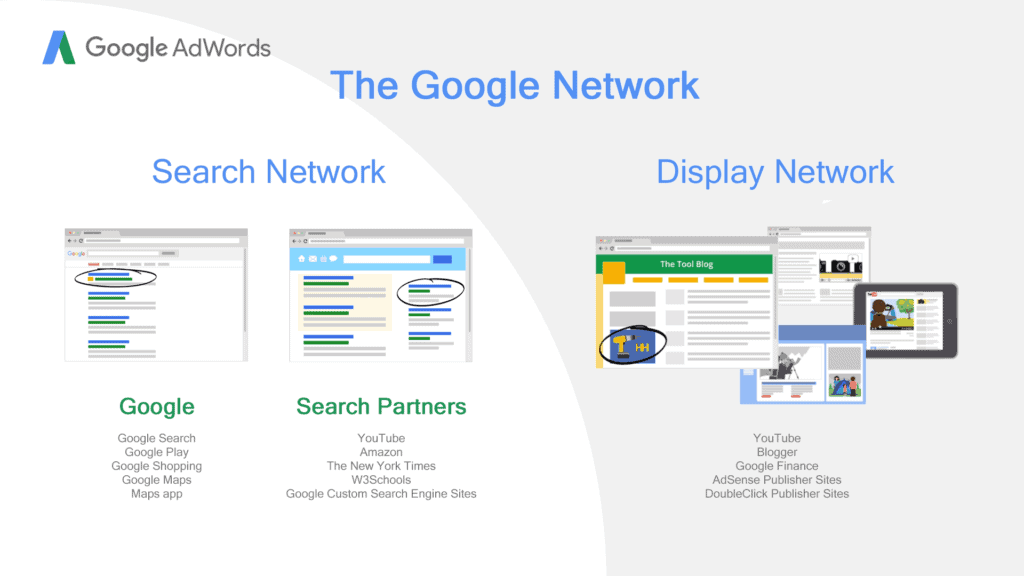
Placement targeting Google Display Network acts as a method to select the most suitable display spaces for the business context. By actively choosing websites, apps, videos, or content categories, you shape where the ad can appear and attract viewers who are highly likely to be interested. This approach helps businesses control both the display environment and the relevance between the message and user needs. When the system evaluates a placement, it combines signals such as the page topic, content relevance, interaction history, and bid competition to determine if the ad is eligible to appear.
Placement Selection Mechanism
The system analyzes the context of each page to understand the content being presented and categorizes it into correlated topics. When the ad carries signals that match that topic, the likelihood of display eligibility will be higher. Relevance is determined based on multiple layers of data such as key keywords appearing on the page, the frequency of related terminology, content structure, and previous user behavior. Some factors that increase relevance include:
- Signals from the ad content, including product topic and target audience.
- The context of the page, including category, text content, and viewer interaction history.
- The consistency between the ad message and user behavior during the visit session.
When these factors align, the ad is likely to be included in the display consideration pool and compete within the most relevant placement group.
Competition Factors in Each Placement
After the context evaluation layer, the ad enters an auction session where multiple advertisers compete for the position. Competition depends not only on the bid price but also on the level of relevance calculated by the system. The more valuable the placement, the higher the competition, requiring a higher effective bid to maintain the chance of appearing.
- Niche Placements: High competition but better viewer quality.
- Quick Browsing Placements: Lower price but performance is highly volatile.
- Popular Placements: Pursued by many advertisers, causing large bid fluctuations day-to-day.
The bid price not only determines winning the placement but also affects the display frequency. When the bid is lower than the actual competition level, the ad is easily restricted in distribution or only appears during times with fewer competitors.
When to Expand or Narrow Placements?
When monitoring distribution performance, there are times when the system needs more data to determine the optimal placements. If you select too few placements, the ad may be restricted from displaying due to excessively high competition or insufficient signal strength. Conversely, selecting too many placements can easily cause the ad to appear in less relevant environments, reducing the interaction rate and increasing the cost per view.
Expanding placements is appropriate when:
- Impressions fall below the necessary level.
- Competition in the main placement groups spikes suddenly.
- The campaign needs more data for the system to learn viewer behavior.
Narrowing placements is appropriate when:
- Interaction rates are unusually low in a group of pages.
- Behavioral signals are unstable because viewers do not match the target audience.
- Cost increases but quality does not improve.
Balancing the expansion and refinement of the placement list is the way to help the campaign maintain a stable distribution rhythm and sustain viewer quality throughout the run.
How Placement Targeting Google Display Network Delivers Quality Viewers

Correctly setting up placements within the Display Network not only helps the ad appear before the right audience but also creates the conditions for the system to clearly understand the content context you want to reach. When implemented correctly, you will acquire a viewer group with a higher level of interest, better interaction rates, and a more reasonable cost. To achieve this, you need to ensure every step in the setup process is accurate and aligns with the overall campaign objective.
Step 1: Access Your Google Ads Account
First, access your Google Ads account to ensure all campaign data is synchronized and displayed correctly. This is the foundational step, as only when logged into the official management environment do you have the authority to edit, create new, or update ad groups. When the account is opened, the system automatically links to all available campaigns, helping you monitor the current status before proceeding to deeper operations.
Step 2: Navigate to the Campaign
Once on the management page, select the campaign you want to edit or create a new one if you don’t have a suitable campaign yet. This is the time when you determine your advertising objective and the format type you are using, as placement targeting is only truly effective when the campaign is properly configured. Choosing the correct campaign helps the system understand which ad groups you are trying to influence and the overall context of the placements about to be added.
Step 3: Access the Content Section
After selecting the campaign, navigate to the Content section in the settings interface. This is where you can navigate to options for placements, topics, and other content targeting types. This section acts as a context control layer, allowing you to specify where the ad is allowed to appear and exclude unwanted areas. By accurately accessing this section, you are directly intervening in how the system distributes ads based on content signals.
Step 4: Add Placements
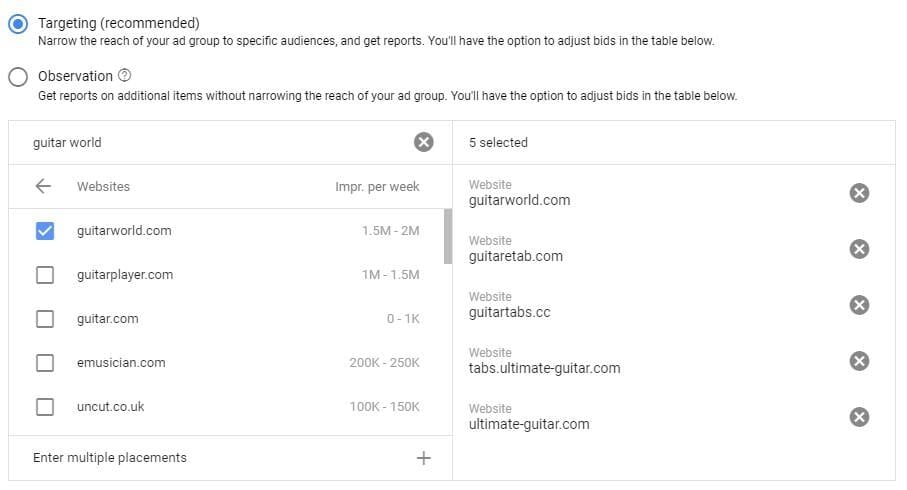
In this step, you enter the URLs of websites, apps, videos, or YouTube channels you want to target. This is the central action, as every placement you add will be cross-referenced by Google against the display requirement, relevance, and potential to deliver suitable viewers. You can select a specific list of placements or use broader categories to expand the distribution scope. However, it is crucial that you choose so the content context aligns with the viewer behavior you want to attract, for example, placing ads on pages with topics closely related to your product.
Step 5: Save Settings
Once you have finalized the desired placement list, save all settings for the system to begin distributing according to your defined direction. This is the final confirmation step, where Google receives your signal and adjusts the distribution algorithms to match the selected placements. When the settings are saved, you can monitor performance over time and evaluate whether the placements bring the quality viewers you expected.
Notes on Usage
When you set bids for individual placements, the system views this price as a priority signal. This means you can increase the ad’s appearance on pages that historically yield high watch time or good interaction rates. Specifying bids also opens up the possibility of testing multiple different placement groups without affecting the entire campaign. Some practical applications include:
- Creating placement groups specifically for pages with high concentration.
- Increasing bids in placements with a history of generating conversions.
- Decreasing bids in placements with many impressions but low quality.
Increasing the adjustment coefficient helps your ad compete more strongly in core placements. This is a flexible way to increase the reach level without raising the total budget too high. When the coefficient is adjusted reasonably, the ad will have the opportunity to appear in more attractive contexts, especially on pages with high traffic or where users frequently interact with similar content.
Even though you have clearly selected placements, the system still relies on the bid price, ad quality, competition level, and content context to decide whether to display or not. This makes monitoring and analyzing performance a mandatory requirement. You need to review metrics such as CPM, display scope within each placement, frequency of context-based restrictions, and interaction levels to adjust the strategy in time.
Placement targeting becomes stronger when used alongside other methods such as topics, keywords, or demographics. This combination allows you to both choose the right display page and select the right viewer, while reducing the risk of over-relying on a single type of signal. In that case, the ad not only appears in the right place but also reaches the right person, helping to improve the view-through rate, interaction rate, and overall traffic quality.
Contact Info
You need a Facebook advertising account but don’t know any reputable provider. Coming to Rentads is where you will experience what you need google ads account for rent prestige, high trust, and professional consulting and service support for customers.
Frequently Asked Questions
You need to evaluate over a longer cycle, exclude sessions with unusual fluctuations, and cross-reference multiple metrics such as CTR, watch time, and appearance frequency. Placements that maintain stable performance across multiple cycles are the ones that deserve prioritization.
Because the system prioritizes content relevance, real-time competition rate, and the ability to meet quality criteria. If the context is inappropriate at that moment, the ad may still not appear.

