Specs bumper ads

Specs bumper ads are the choice utilized by many brands when needing to convey a message extremely quickly while still maintaining a clear impression. This 6-second format creates an intriguing challenge, where every detail must be concise, precise, and powerful enough for viewers to recognize in just a few moments. When implemented correctly, specs bumper ads not only support reach expansion but also create a very good cumulative effect thanks to their short distribution frequency, which does not feel intrusive to the viewer. It is the characteristic of appearing quickly, leaving the screen quickly, and leaving a clear identification that has made this format an important tool in a brand’s short video strategy.
The Perspective of Specs Bumper Ads
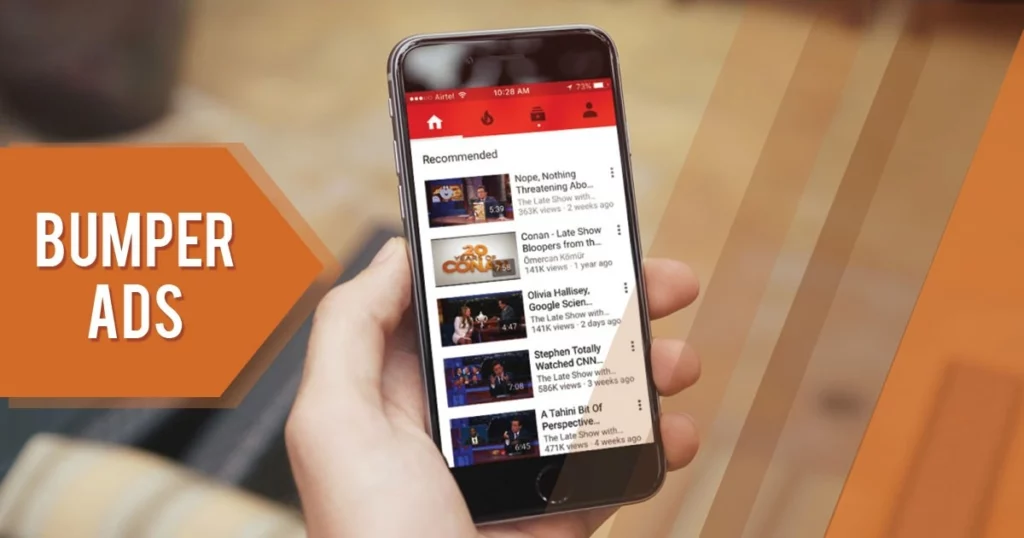
This perspective shows that the six-second format is not merely a brief choice, but a specific requirement that forces brands to incorporate speed, clarity, and memorability into a single framework. When examining the technical details and how the format impacts viewer behavior, it is clear that bumper ads always operate on a mechanism of quick impact and leave an immediate recognition trace before the viewer moves on to the main content. From this foundation, the technical specifications set the limits, while the distribution frequency creates the long-term cumulative force.
Key Technical Specs
When considering the operational structure of the bumper format, technical factors play a defining role in distribution behavior and compatibility across devices. The basic requirements include:
- Maximum duration of 6 seconds with a non-skippable status.
- Purpose focused on expanding awareness, supplementing touchpoints, and reinforcing a short message.
- Maximum file size of 1GB to ensure consistent loading and processing speed.
- Recommended resolution of 1920×1080, 1080×1080, or 1080×1920 depending on the aspect ratio.
- Aspect ratios include 16:9, 1:1, and 9:16 to suit diverse display spaces.
- Frame rate is typically between 24, 25, or 30 FPS to ensure smoothness.
- Common file formats such as MP4, MOV, MPEG4, AVI.
- Audio is mandatory to allow the brand’s highlight to appear clearly.
- Billing method based on CPM (Cost Per Mille) and suitable for the objective of expanding reach.
- Compatibility across desktop, mobile, and TV.
- Display placement before or during YouTube videos.
These specs bumper ads establish the technical groundwork for brands to choose a storytelling approach suitable for the extremely short duration, avoiding image overload or loss of content flow due to time constraints.
6 Seconds Must Condense the Message
The six-second duration forces content creators to define the highlight from the very first frame and completely eliminate details that do not serve the recognition goal. When placed under such tight limits, the message structure needs to be simplified into a single touchpoint, avoiding the attempt to cram in multiple ideas which leads to cognitive fragmentation.
Therefore, six seconds acts as a natural filter that helps brands stabilize their brand voice and create a streamlined version of the core message. In many cases, this condensation also helps speed up memorability because the brain processes simple signals faster. Six seconds also form a timeframe just long enough for sound or a slogan to be anchored in memory without being interrupted by extraneous details.
Distribution Frequency Creates Cumulative Effect
Distribution frequency is the key determinant of the long-term effectiveness of the bumper ad, as each six-second viewing session functions as a “small piece” in the user’s total touchpoints. When the frequency is maintained at an appropriate level, the viewing sessions connect and create a cumulative effect, leading viewers to form recognition without needing exposure to longer content. This mechanism is especially important for brands that need to increase memorability quickly, or are running multiple video formats simultaneously to build a seamless recognition journey.
Determining the appropriate frequency also relates to the advertising sensitivity of each target group. When distribution is too sparse, the cumulative effect is diminished. When distribution is too dense, viewers may feel repetition. Thus, the optimal frequency lies in the balance zone, where each six-second viewing session adds a small but steady layer of information, helping the brand maintain a consistent image without pressuring the user experience.
Implementation Methods to Prevent Message Overload
When working with the six-second format, every detail runs in high-speed mode, so the message can easily become overloaded if the visual structure is not concise enough. The main goal is to make viewers recognize it instantly, follow the content flow smoothly, and conclude with a highlight strong enough to leave a lingering impression instead of feeling abrupt.
Setting Up a Clear Enough Opening Visual
The opening is the gateway that determines whether viewers will continue to focus. In the six-second format, constructing the first frame must focus on two main factors: clarity and quick recognition. The visual should avoid unnecessary details, instead prioritizing:
- Brand representative colors.
- A concise logo that does not take up too much of the screen.
- An object or action that conveys the main idea of the message.
When the opening visual is clear, viewers can easily latch onto the subsequent content without “freezing” to guess what the brand is trying to say.
Creating a Content Path with an Accelerating Rhythm
Once the opening has given the “green light,” the content flow needs to be paced appropriately so information isn’t bottlenecked. Six seconds is not enough for a long story, but it is enough to create a sense of purposeful movement. The content path should follow an accelerating logic: quick introduction – value confirmation – preparation for the endpoint. Even as the speed increases, each transition must maintain coherence so that viewers do not feel overly pushed or forced to absorb information.
Choosing an Endpoint to Leave a Recognition Trace
The final second must serve the role of leaving a clear impression without the content feeling abruptly cut off. Instead of trying to cram in more information, the ending should focus on a single highlight. This could be the logo, a shortened tagline, or a memorable brand visual. When viewers leave the video but still recall a specific element, the ad has completed its most important task: leaving a deep enough recognition trace, even though the entire content took place in just a few brief moments.
Solutions to Boost Effectiveness Based on Actual Viewing Behavior
When implementing Bumper Ads with a super-short duration, every creative decision must be based on real data about viewing behavior. Observing how users react in the first few seconds helps the brand understand which part of the content is retaining viewers and which part causes them to immediately scroll past.
Adjusting Content Based on Data from the First 3 Seconds
Data clearly shows that the first three seconds are the critical time for Bumper Ads. When the retention rate at this mark is low, the brand needs to review the deployment order of visuals and messages. Pushing the strongest elements forward, such as the product’s point of difference, prominent visual elements, or strong movement, helps increase the ability to hold attention.
If data shows viewers leave at a static visual rhythm, switch to fast movement. If the drop-off occurs when there is too much text, reduce the density and prioritize visual signals. Adjustments must always be based on repeated data from multiple viewing sessions to eliminate noise and find the appropriate optimal point.
When to Prioritize Logo Emphasis and Product Focus
With Bumper Ads, the decision to place the logo early or late should be based on the brand’s objective and current recognition level. If the brand is new or in the phase of consolidating familiarity, placing the logo early in a clear layout helps viewers remember easily.
However, when the goal is to drive demand or highlight a specific feature, the product visual should take precedence, with the logo moving to the endpoint to avoid taking up the already limited visual space. Additionally, data shows that industries with strong visual products, such as beverages, fashion, or home goods, often achieve better performance when opening with the product. Conversely, service industries with high abstractness need the logo to appear early to create an anchor of recognition from the start.
Contact Info
We provide services google ads account for rent nationwide, and with a team of experienced and qualified staff who both support advertising and can directly perform Facebook advertising if you need. Contact us via phone number.
Frequently Asked Questions
The most accurate way is to analyze the retention graph frame-by-frame and cross-reference it with the type of movement. If the drop-off occurs right when the rhythm slows, the problem lies with the delivery speed. If the drop-off coincides with a specific frame, the cause is the visual content.
It is necessary to prioritize analysis by distribution context, then group viewing sessions with similar conditions. When the signals are cleaned and clustered, the recurring behavioral patterns become clear, avoiding adjustments based on noisy data that leads to creative deviation.

