TrueView in display ads
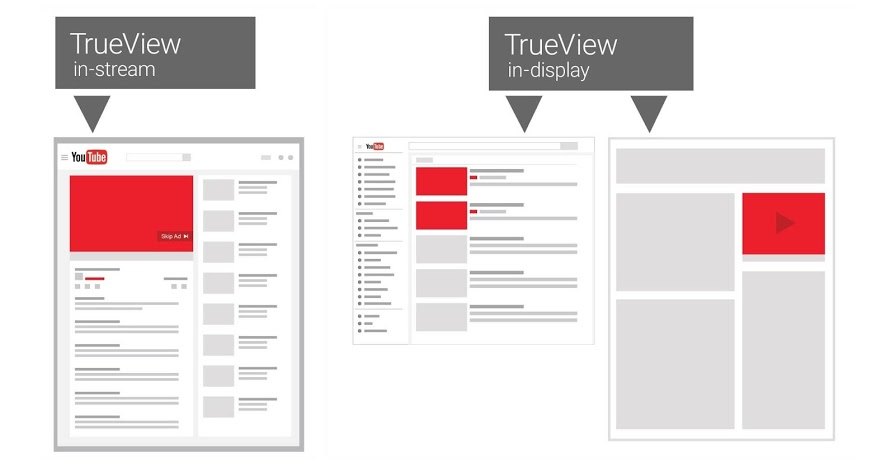
Display advertising has long been an essential tool for building brand awareness and reaching potential customers at scale. One of the groundbreaking solutions that brings real value to both advertisers and viewers is the application of TrueView in display advertising. This model is well-known in video advertising, but when integrated into the display environment, it created a new standard for transparency and effectiveness. By only paying when users genuinely view or interact with the ad, TrueView in-display ads help businesses ensure costs are utilized optimally, focusing on the truly interested audience. This article from Rentads will delve into how to deploy and leverage this advanced format to drive business growth.
The Role of TrueView in Display Ads in Filtering Capability
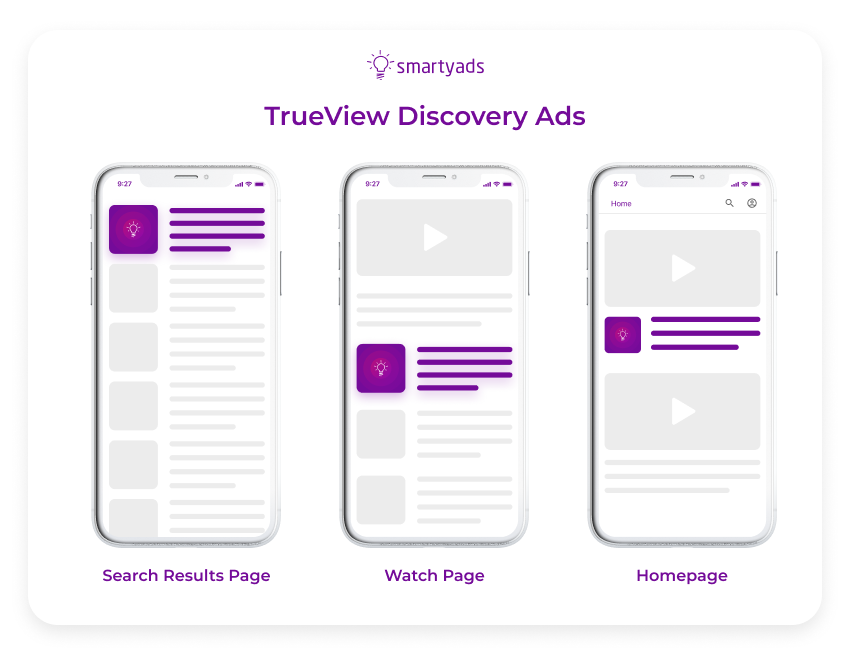
When brands need to control the actual impact level instead of just increasing the number of appearances, TrueView in-display ads become one of the highly targeted options. The nature of this format lies in relying on the viewer’s proactive behavior to filter out the genuinely interested group. Thanks to the viewer-selected viewing mechanism, TrueView helps brands refine resources, expand to the right audience, and minimize costs for impressions with low conversion potential.
Matching Display Context to Reduce Waste
One of the significant advantages of TrueView is its ability to operate based on the suitability of the display context. When the ad appears correctly within a compatible content environment, for example, topics related to needs, products, or behavioral groups, the skip rate significantly decreases, and proactive viewing signals increase. This contextual matching helps reduce a large portion of noisy reach, which often occurs when ads are distributed within irrelevant content. By segmenting topic categories, video suggestions, or interests, the brand ensures that TrueView only appears where it is likely to generate genuine attention, rather than broad but ineffective reach.
Relevance Through Proactive Viewing Signals
TrueView allows the system to read signals that traditional display formats cannot record: the voluntary view rate, the retention level, and the watch duration before the user chooses to continue watching. These signals become the foundation for the algorithm to identify highly relevant viewer groups and automatically optimize towards deeper distribution within similar groups. This mechanism enhances the quality of reach, as the brand does not have to pay for impressions that are immediately skipped. Conversely, every recorded view carries data value, supporting the current campaign while unlocking higher-accuracy remarketing segments.
Sequential Interaction After the First Viewpoint
TrueView does not stop at recording a view; it also creates the ability to trigger a subsequent interaction chain. When a user is proactive in the first view, the probability of them continuing to interact with the brand’s subsequent content—such as watching a longer video, visiting the website, or engaging in conversion behavior—increases significantly. Advertisers can utilize data from TrueView to construct a multi-layered distribution journey: an initial recognition layer, an information expansion layer, and an action-driving layer. This layering transforms a voluntary view into a starting point for an in-depth interaction chain, suitable for nurturing awareness and guiding the viewer toward conversion without causing a feeling of coercion or overload.
Content Structure to Enhance Display Effectiveness
When placing TrueView in the display advertising environment, the brand is not just optimizing for one viewing moment but is operating a multi-touchpoint access journey with varying levels of focus. Therefore, the content structure becomes the foundation for maintaining coherence, ensuring that every piece of information that appears serves the guiding objective and does not cause overload. Organizing content into layers of absorption, supplementing with directional transitions, and maintaining a stable density of detail help the ad retain viewers more naturally, while enabling the distribution algorithm to prioritize genuinely interested user groups.
Separating Information Layers by Absorption Level
Separating information layers is the first step in building a sustainable content flow, especially in a display environment where attention is always fragmented. An effective approach usually starts with a concise message layer, acting as a recognition signal to help viewers orient the topic within the first few seconds. The second layer expands the main idea with data, benefits, or social proof, but remains concise to avoid breaking the rhythm. The final layer is reserved for deep persuasive elements, such as explaining the product’s differentiators or providing reasons for continued interaction. This clear layering supports viewers in receiving information at the right pace, while increasing the ability to maintain attention during the most critical parts of the ad.
Guiding Content Flow with Transitions
After layering, the brand needs a system of transitions that keeps the content flow tight and easy to follow. In display advertising, directional transitions—such as changing perspectives, emphasizing with visual characters, or organizing information using a cause-and-effect structure—help viewers not fall out of the flow when the ad shifts from one point to another. The use of content anchors—such as maintaining a central image, a dominant sound, or emphasizing with a short, repeated phrase—also increases memorability. A good transition does not interrupt but creates a natural forward rhythm, making the information feel “guided” rather than crammed. This is especially important when the brand wants to convey a lot of content while maintaining the necessary coherence for the viewing experience.
Stabilizing the Rhythm by Controlling Detail Density
Detail-rich content often feels persuasive, but in display advertising, too high a density can easily fatigue viewers and lead them to leave before grasping the main idea. Controlling detail density requires the brand to balance background information, supporting evidence, and emotional content. Segments requiring emphasis can be highlighted with specific visuals, while supporting parts should be kept moderate to maintain a stable reception rhythm. An effective strategy is to use a “highlight – relax – highlight” model: focusing information on two or three key segments, while the remaining parts are simplified to give viewers cognitive breathing room. As a result, the ad is not only easier to absorb but also creates natural content adherence, making the display journey seamless and unbroken.
Ensuring Distribution Quality with In-Depth Tracking Metrics
When implementing ads based on proactive viewing behavior, relying solely on impressions or cost is no longer sufficient to reflect the true quality of distribution. Brands need a system of in-depth metrics to identify how viewers react to each piece of content and how the distribution algorithm is prioritizing, thereby creating stable checkpoints throughout the entire campaign lifecycle. These metrics serve not only as measurements but also as the foundation for creative, segmentation, and budget optimization decisions.
Reading Retention Fluctuation to Identify Drop-off Points
The view retention rate is always one of the most sensitive metrics, accurately reflecting the moment viewers lose interest or are pulled away from the content. By observing the retention graph curve, the brand can see unusual “drop-off points” where the retention level decreases rapidly. This is often a consequence of an inadequate editing rhythm, abruptly complex information, or a distracting visual element. Tracking retention in 1–2 second segments helps the creative team clearly identify which parts need to be shortened, which transitions need to be adjusted, or where an audio layer is needed to maintain attention. If retention remains stable in the first 5–7 seconds, the campaign is almost certain to have a better distribution foundation due to the quality signal being prioritized by the algorithm.
The Performance of Micro-Creative Variants
An effective campaign is rarely based on a single variation. Micro-creative variants—such as changes in the opening dialogue, editing speed, frame composition, or visual emphasis—allow the brand to test the level of suitability for each audience group without altering the entire video. This testing process relies on metrics such as click intent, average watch time, and completion rate. Each variant will reflect different reception behaviors and help the brand determine which version generates better quality signals for distribution. When a variant performs significantly better, shifting the budget to that version helps the campaign maintain high performance without needing to change the overall distribution strategy.
Establishing an Effectiveness Function to Maintain Distribution
For the system to operate stably, the brand needs an effectiveness function that is detailed enough but does not cause information overload. This function typically includes three main layers: view performance, proactive engagement quality, and post-view behaviors. Establishing minimum thresholds for each layer—such as expected VTR, 25–50–75% view rates, or post-view revisit levels—helps the brand know when the campaign is on track and when creative restructuring is needed. When the tracking system is clear, optimization becomes more consistent: compliant content will be prioritized by the algorithm for distribution, while content falling below the threshold will be moved into the adjustment cycle. This creates a stable distribution cycle, maintaining quality and reducing performance volatility over time.
Contact Info
Information about “TrueView in display ads” hopes to provide you with additional necessary knowledge. At Rentads, there is a team of highly qualified and experienced staff and experts who will provide google account for rent as well as support when you run Facebook ads. Contact us via phone number.
Frequently Asked Questions
Shortening the duration does not guarantee improved retention if the information structure still causes a “hiccup” in the initial seconds. Retention depends on the opening’s guidance, the editing rhythm, and visual emphasis. If the message is unclear in the first 1–3 seconds, the algorithm still assesses a low-quality signal, meaning the retention rate does not change even if the video is shorter.
A steady retention drop throughout the entire video usually reflects a targeting issue; conversely, retention drops in distinct “fall streaks” indicate a fault in the content structure. Comparing retention across different audience groups and across different creative variants will help determine the precise cause.

