Youtube in video overlay ads
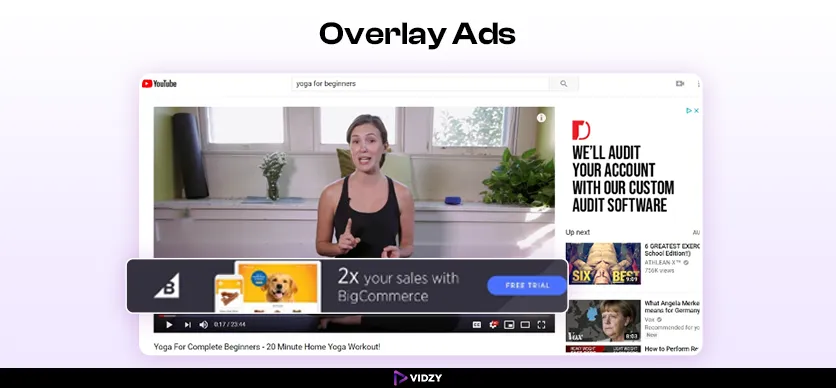
As viewers become increasingly accustomed to fast-forwarding or skipping ads, streamlined display formats are being prioritized by many brands. Youtube in video overlay ads appear directly on the video playback frame, maintaining brand presence without interrupting the flow of the main content. Thanks to their subtle placement, messages can be received more gently, making them suitable for campaigns that need to maintain consistent awareness levels. However, the effectiveness of this format does not come from simply “inserting” into a video, but relies heavily on visual presentation, brevity of text, and the relevance between the ad content and the video being played. When implemented correctly, youtube in video overlay ads can become a familiar touchpoint, helping brands maintain a regular presence while still respecting the user’s viewing experience.
Youtube in video overlay ads at the Implementation Level
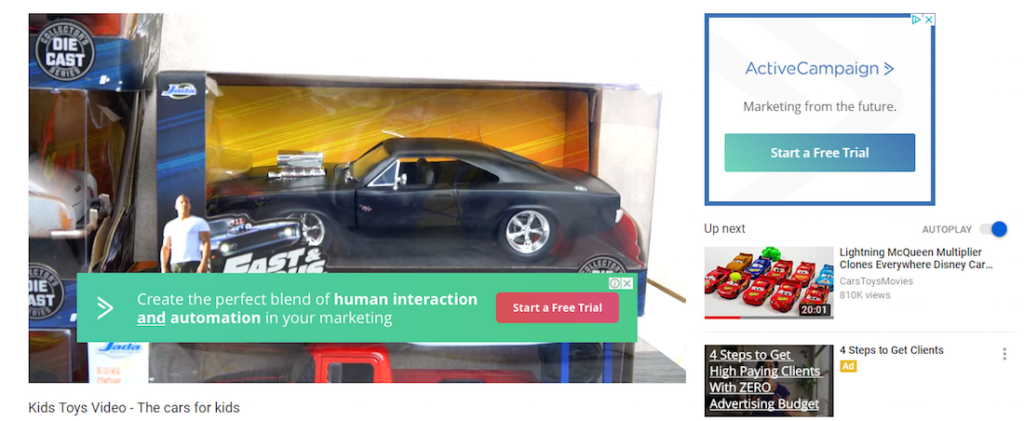
Overlay ads are a visual or text-based ad format that appears across the bottom of the video playback frame on desktop platforms. Unlike interruptive video formats like in-stream ads, overlays operate on a “non-invasive” mechanism, allowing users to continue watching the main content while the brand message maintains a persistent presence on the screen. At the implementation level, operating this format requires administrators to strictly control parameters regarding placement, devices, and compatibility with the original content to ensure optimal cost-effectiveness.
In What Context Do the Ads Appear?
Typically, youtube in video overlay ads do not appear immediately but begin displaying after the main video has played for about 10 to 15 seconds. The default display position for this format occupies approximately 20% of the bottom area of the video frame. This is a strategic position that keeps the message in the viewer’s direct line of sight without obscuring the most critical details of the main video. Users have full autonomy to interact with this overlay: they can click to navigate to a landing page or actively press the “X” button to close the ad if they feel distracted. In practical implementation for sectors like E-commerce, if the overlay image is attractively designed with a clear promotional message, the click-through rate (CTR) can reach 0.8% to 1.5%. This proves that when appearing in the right context and at the moment of high viewer focus, overlays provide significant direct conversion efficiency at a lower cost than long-form video formats.
Display Limitations to Consider Before Launching
One of the biggest technical limitations of youtube in video overlay ads that advertisers often overlook is device availability. This format is currently only displayed on desktop computers and does not appear on mobile apps, tablets, or Smart TVs. This limitation directly impacts budget distribution and audience reach scale. If your target audience has a habit of using mobile phones for 90% of their total watch time, allocating a large budget to overlay ads will lead to a “bottleneck” situation, where ads cannot be displayed at full capacity or CPM (cost per 1,000 impressions) rates are driven up due to high competition in the desktop segment. In reality, CPM for desktop overlay ads can fluctuate from $4.00 to $7.00 depending on industry competition. Therefore, forecasting device traffic is a mandatory step before approving an overlay campaign.
Overlays Are Not Suitable for All Content
While often cheaper than video formats, youtube in video overlay ads are very “selective” about the content they appear on. The performance of this ad depends closely on the visual layout of the original video it overlays. If the main video has many subtitles, tickers, or important graphic information located at the bottom of the frame, the overlay ad will cause a serious disruption in the user experience. This conflict leads to negative impacts on metrics:
- High Ad-Closing Rates: According to performance reports, on videos with subtitles near the bottom edge, the rate of users clicking to close the ad within the first 2 seconds can be as high as 75%.
- Brand Damage: Obscuring information that viewers care about creates a sense of frustration toward the brand appearing on the overlay.
- Actual Stats: Conversely, on content like talking vlogs or landscape videos with empty space at the bottom of the frame, the average display time for an overlay can last over 25 seconds, helping to increase brand recall effectively without the additional costs of other pay-per-watch formats.
How to Use Overlays to Complement Rather Than Overpower the Main Content

Overlay ads should be operated as a complementary information component rather than a visual obstacle. Overusing this format can trigger a backlash, increasing bounce rates and damaging brand reputation. To achieve a balance between conversion goals and viewing experience, advertisers must focus on the subtlety of timing, message structure, and natural behavioral direction.
The Impact of Ad Trigger Timing
The core rule in implementing overlays is to avoid appearing too early before the viewer has settled into the main video content. An overlay appearing at the very first second is often perceived as spam and is almost certainly closed immediately. Conversely, setting the appearance time after the user has passed the “introductory” phase helps the message be received more openly. Based on operational data, user acceptance fluctuates significantly over time:
- 0 – 10 Second Phase: Early ad-closing rates can reach 85% as users are highly focused on determining if the video content is relevant.
- After 30 Seconds: This is the “sweet spot” for an overlay to appear. At this point, once the viewer’s mindset is stabilized, a subtle overlay with a CPM of $4.00 to $6.00 can maintain a display time 2.5 times longer than an ad appearing at the start.
Placing Messages Without Disrupting the Viewing Flow
The layout of successful youtube in video overlay ads must follow the principles of minimalism and moderate contrast. Since this format occupies screen real estate, using too many vibrant colors or complex fonts can feel overwhelming. Instead, the message should be presented in a “problem-solving” format directly related to the video topic the user is watching. For example, in a graphic design tutorial video, an overlay advertising a course with the short text “Master Photoshop in 30 Days” would be more supportive than a general retail ad. Actual data shows that ads with high contextual relevance typically reduce the “X” (close ad) rate to below 15% and increase brand consideration time without breaking the viewer’s emotional flow.
The Role of CTA When Viewers Aren’t Ready to Leave
The Call to Action (CTA) on an overlay acts as a convenient “shortcut” rather than a forced buying urge. Unlike in-stream video ads that require users to watch for a certain duration, overlays allow users to save the message for later interaction. The role of the CTA here should be redefined toward providing additional value:
- Soft CTA: Instead of “Buy Now,” phrases like “Learn More” or “Get Resources” often have a 20% to 30% higher CTR in the overlay format.
- Behavioral Optimization: With an average Cost Per Click (CPC) of about $0.50 – $1.20 for the desktop segment, placing a clear but modest CTA in the right corner of the overlay helps advertisers filter for truly interested customers. This ensures that even if viewers don’t click immediately, the message persists in their subconscious without feeling forced to abandon the video they are watching.
Contact Info
Are you in need of Facebook advertising or need to rent a quality Facebook advertising account? Don’t worry! Rentads is a unit specializing in providing reputable Facebook accounts, as well as direct advertising support. Provides all types of advertising accounts such as google ads agency account for rent to help you reach and create fast conversions.
Frequently Asked Questions
No. When a user clicks an overlay ad to navigate to another website, it is counted as an ad click, not a view for the video currently playing. However, if the ad is too annoying and causes the user to close the video early, it can indirectly decrease the “average watch time” of that video, affecting the algorithm’s organic recommendation.
Yes, this can be done through the “Placements” targeting feature in Google Ads. However, display performance will depend on whether that competitor’s channel has monetization enabled and allows the overlay ad format. If the channel is highly competitive, your actual CPM could skyrocket to the $8.00 – $12.00 range, twice as high as targeting general topics.

