Youtube trueview skippable
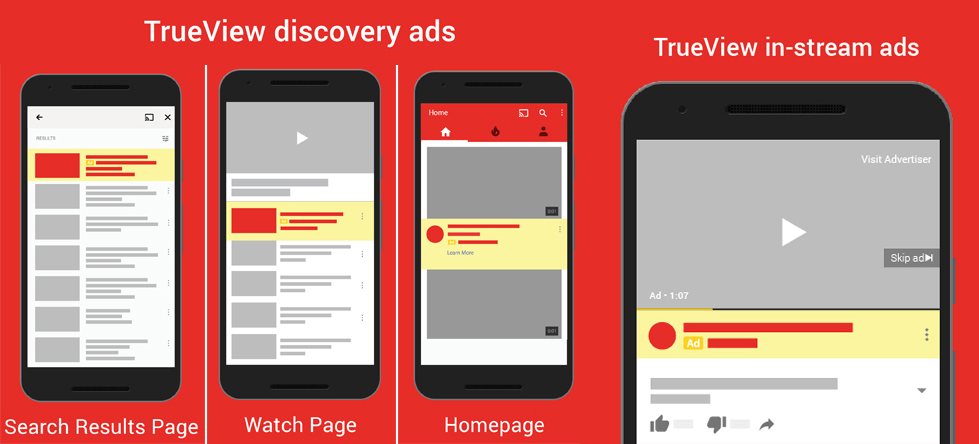
Youtube trueview skippable is a format chosen by many brands when they need to balance reach with viewer experience. Users have the right to skip after the first few seconds; therefore, the ad only truly becomes effective when the content is engaging and focused right from the very first touchpoint. Instead of “forcing a view,” this format compels brands to invest seriously in their messaging, editing pace, and storytelling to retain valuable views. In a context where budgets increasingly need optimization, youtube trueview skippable is not just a technical puzzle but also a content strategy challenge. To understand how to implement it correctly and avoid wasting impressions, let’s join RentAds in exploring the critical factors surrounding this ad format.
YouTube TrueView Skippable from a Distribution Control Perspective
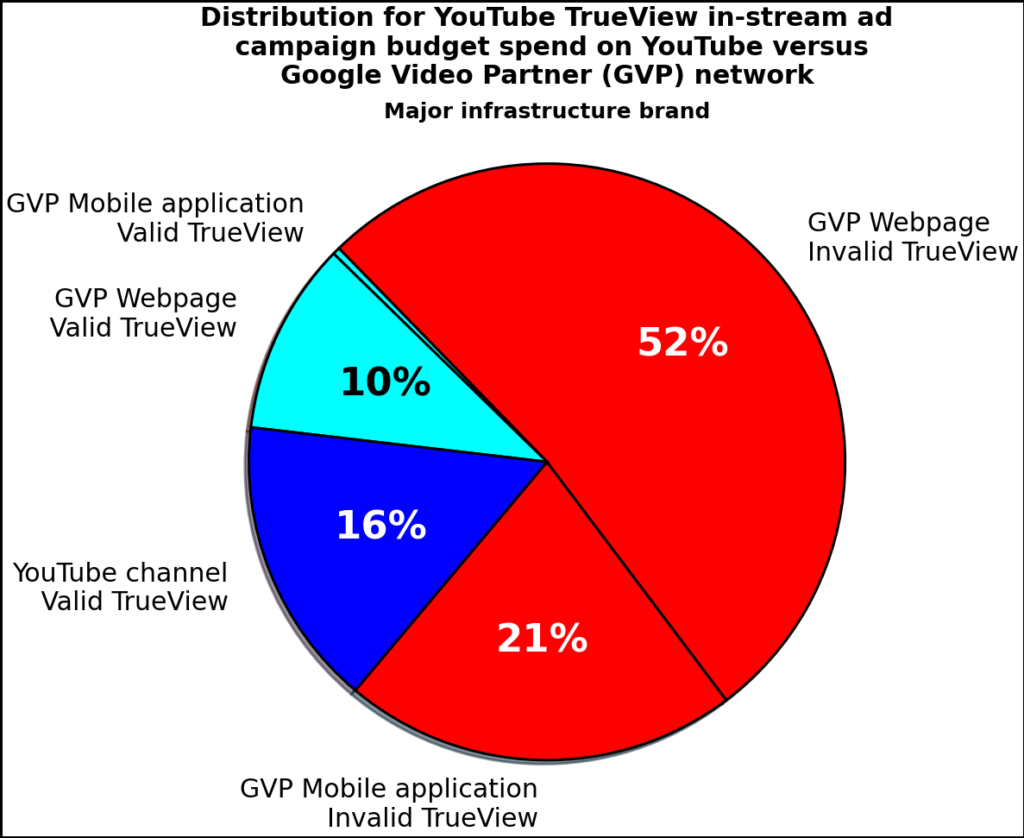
Youtube trueview skippable is one of the few video formats that allows brands to reach viewers at scale while maintaining clear control over how the budget is utilized. The distinguishing feature of this format lies not in its flexible duration, but in its distribution mechanism, which is tightly linked to the viewer’s active behavior.
Qualified View Counting Mechanism
With youtube trueview skippable, not every impression is counted as a valid view. The system only records a view when a user watches at least 30 seconds of the video, or watches to the end if the duration is shorter than 30 seconds, or performs an intentional interaction such as clicking a CTA, banner, or accompanying link. This calculation helps the budget focus on exposures likely to bring real value, rather than just stopping at brand image visibility.
From a distribution control perspective, this mechanism creates a natural filter. Those with no need or interest will skip after 5 seconds, while those who stay typically have a higher level of attention. This makes TrueView an ideal format for campaigns needing to optimize costs based on view quality, especially when combined with Brand Consideration or Traffic goals. However, if the content is not engaging enough, a high skip rate will cause qualified views to drop sharply, directly affecting the distribution speed and the campaign’s machine learning capability.
When Viewers Gain the Right to Skip
The right to skip appears after the first 5 seconds, marking the transition of control from the system to the viewer. During these 5 seconds, the ad is still mandatorily distributed, regardless of user interest. After this mark, every decision to continue watching is voluntary. This feature makes youtube trueview skippable clearly different from non-skippable formats or bumper ads.
In terms of distribution, the timing of the skip option directly affects how the algorithm evaluates ad quality. If the percentage of viewers continuing after 5 seconds is stable, the system will prioritize expanding distribution to similar audience groups. Conversely, if most users skip as soon as possible, the campaign tends to face tighter distribution or higher CPMs to find qualified views. Therefore, controlling this transition phase effectively helps advertisers maintain a stable distribution rhythm without needing sudden budget increases.
Impact of the First 5 Seconds on Campaign Performance
The first five seconds are not just the video’s opening; they are the deciding factor for the entire performance of a youtube trueview skippable campaign. This is the only period where the brand is guaranteed to be seen, and it is also when viewers quickly judge whether the content is worth continuing. If the message is too roundabout or the visuals lack impact, skipping becomes a natural reflex.
From a distribution control standpoint, the first 5 seconds act as a quality filter. Videos with strong openings usually achieve higher retention rates, helping the system learn faster and distribute more accurately. Conversely, a weak opening forces the campaign to “pay the price” with higher costs to reach the same amount of qualified views. Consequently, many brands choose to present their main message, brand identity, or the viewer’s core problem within the first few seconds, rather than saving it for the end like traditional storytelling.
Shaping Content for Active Viewing Behavior
With ad formats that allow viewers to actively decide whether to continue or skip, video content is no longer received in a passive state. Viewers enter the ad with an “evaluative” mindset from the very first seconds. This compels brands to shift their content approach from linear storytelling to a refined, value-prioritized mindset.
The Role of the Video’s First Touchpoint
The first touchpoint of a video is not merely an opening image; it is the moment that decides the remaining time of the ad. In the context of skippable ads, the first 3–5 seconds serve as a “relevance test.” If the opening does not hit the viewer’s interests, the ad is almost immediately dismissed, regardless of how well the rest is produced.
An effective touchpoint should quickly answer two questions for the viewer: what is this about and how does it relate to me? This can be achieved by directly showing the product’s usage context, a familiar situation, or a specific problem the target audience faces. Delaying important information to “build emotion” as in short films is usually unsuitable for active viewing behavior, as viewers do not have the patience to wait.
Editing Pace Affects Retention Levels
Once the initial touchpoint is passed, the editing pace becomes the factor that determines the ability to retain viewers in the following seconds. For short or medium video ads, the pace must be tightly controlled, avoiding two extremes: too slow, causing viewers to lose focus, or too fast, creating a sense of being overwhelmed.
A suitable pace usually comes with a clear visual structure, where each scene has a specific purpose and contributes directly to the overall message. Transitions should be minimized, limiting decorative effects that do not serve the content. In an active viewing context, viewers are constantly assessing whether the video continues to provide value. Therefore, the editing pace needs to feel coherent, helping viewers follow along without cognitive breaks.
Core Message Needs to Appear Early
A common mistake in building ad content is letting the core message appear too late, expecting viewers to patiently watch until the end. With active viewing behavior, this approach carries high risk. The main message should be introduced early, and even repeated in different forms throughout the video, to ensure that even short views record brand value.
Introducing the message early does not mean presenting it in a rigid or sales-heavy manner. Instead, the message can be “embedded” through product usage visuals, concise dialogue, or a positioning tagline. What matters is that viewers quickly understand what the video is talking about and what the brand wants to convey, even if they don’t watch until the final second.
Optimizing Budget Based on Opt-in Viewing Behavior
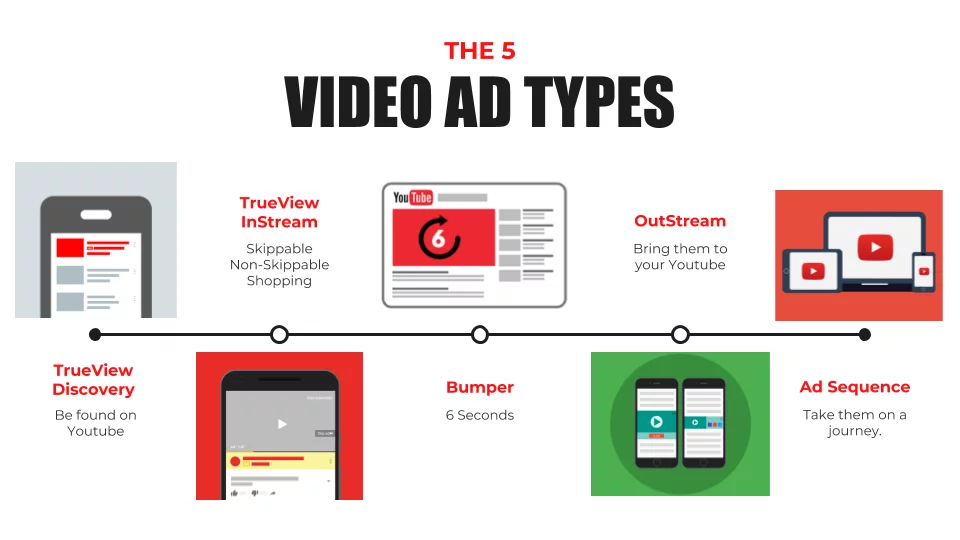
By allowing viewers to actively decide whether to continue or skip, youtube trueview skippable places the ad budget into an operational mechanism very different from forced-display formats. Instead of paying for every appearance, brands only pay when viewers demonstrate a clear level of interest.
Distinguishing Impressions from Qualified Views
In youtube trueview skippable, not every time the video appears is it counted as a cost. Impressions reflect the number of times the ad is distributed to users, but a qualified view only occurs when a viewer crosses a certain threshold. Specifically, for in-stream ads, Google only charges for a view when the user watches at least 30 seconds, or watches to the end if the video is shorter than 30 seconds, or performs an interaction like clicking a CTA.
This separation prevents the budget from being “consumed” by superficial exposures. Those who skip right after the first 5 seconds still create certain reach for the brand but do not increase costs. This makes TrueView a format that ensures reach while providing a natural filter to retain the audience likely to be genuinely interested. When reading reports, advertisers need to analyze both impressions and views in parallel to avoid misjudging campaign effectiveness.
Controlling Costs Through the Skip Threshold
The 5-second skip threshold is not just a technical milestone; it is a clear cost-control tool. During the first 5 seconds, brands have the opportunity to convey basic awareness messages without paying for a view. Costs are only triggered when viewers actively stay, meaning the budget is being allocated to an audience group with higher-than-average interest.
To take advantage of this, content should be designed in two layers: the first layer for quick recognition, and the second layer for persuasion. If the main message appears too late, viewers may skip without leaving any mark; conversely, if the first 5 seconds are clear enough, the campaign still achieves media value even if qualified views are not high. Balancing content this way keeps the average cost per view reasonable while avoiding situations where the budget increases without a corresponding increase in actual effectiveness.
When This Format Fits Brand Goals
Youtube trueview skippable is particularly suitable for goals requiring selective interest. For awareness campaigns, this format allows broad appearance while maintaining budget control thanks to the pay-per-qualified-view mechanism. For deeper goals like consideration or driving traffic, TrueView helps naturally screen viewers who tend to stay and interact, thereby improving traffic quality.
However, this format is not optimal in all cases. If the goal is to ensure every viewer receives the message in its entirety, or if the campaign needs strict control over exposure duration, non-skippable formats may be more appropriate. Conversely, when a brand is willing to let users decide, viewing behavior as a signal of distribution quality, youtube trueview skippable becomes an effective tool to balance reach, cost, and actual interest.
Contact Info
You need a Facebook advertising account but don’t know any reputable provider. Coming to Rentads is where you will experience what you need google ads agency account for rent prestige, high trust, and professional consulting and service support for customers.
Frequently Asked Questions
This issue is often related to technical latency or interface conflicts on the user’s device (especially on smart TVs or browsers with incomplete ad-blocking settings). Additionally, if your video contains excessively heavy graphic elements or non-standard compression formats (not H.264), the countdown loading process may be delayed. However, regarding policy, Google always ensures this button appears to protect the user experience, unless you accidentally selected the “Non-skippable” format.
Any click action on ad components (such as the headline, CTA button, or info cards) is considered an “Active Interaction.” When this interaction occurs, the system immediately charges for a view regardless of how long the user watched the video. This reflects the core nature of TrueView: you pay when the customer shows genuine interest in the product or service.

