Shopee seller ads
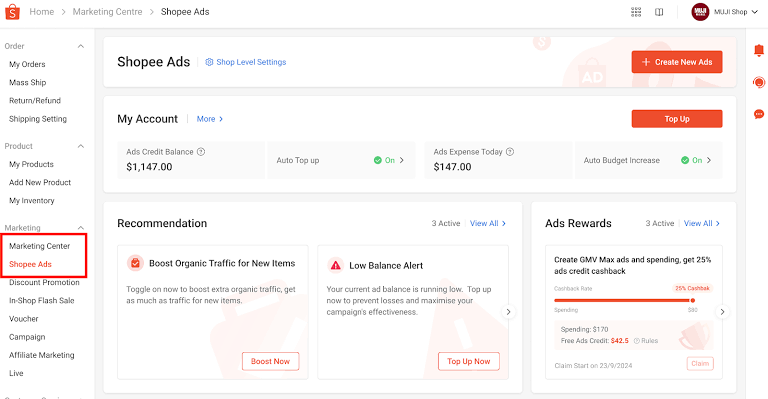
Relying solely on organic traffic rarely drives sustainable store growth given the immense volume of products on the platform. Utilizing shopee seller ads positions your products in premium placements directly in front of active buyers. Maximizing performance from shopee seller ads requires strategic budget allocation across display formats rather than uncontrolled spending. Let RentAds guide you through leveraging each ad tool to optimize cash flow and scale actual order volume.
Core Ad Formats Within Shopee Seller Ads

Shopee provides multiple advertising tools, each with distinct buyer touchpoints. Rather than activating all formats simultaneously, sellers should select tools based on specific goal whether driving immediate sales, expanding traffic, or building brand awareness and then allocate budgets while tracking metrics individually for each segment.
Search Ads
Search Ads should be your primary focus when the main goal is direct order generation. Start with high-intent keywords closely matching your product, such as specific product names, brand keywords, functional benefits, or exact user needs. For broader search terms, apply conservative bids to prevent ad spend from draining on non-converting clicks.
Avoid keeping bids static across all keywords after launch. Keywords generating consistent orders with a low CIR warrant incremental budget increases; conversely, search terms with high click counts but zero conversions should undergo bid reductions or pauses. Focus specifically on CPC, CTR, order count, cost-per-order, and CIR rather than tracking ad placement rankings alone.
Discovery Ads
Discovery Ads excel when expanding reach beyond active searchers. Prioritize products that already feature high-quality visuals, competitive pricing, solid reviews, and proven conversion histories to capitalize on algorithmic recommendation traffic.
To maintain budget control, segregate Discovery Ad campaign groups from Search Ad structures to compare costs and order volume by traffic source. If a product yields high impression and click volumes but its CIR consistently exceeds break-even thresholds, swap out the SKU or lower its budget instead of scaling spend for traffic alone.
Shop Ads
Shop Ads are best deployed once a seller establishes hero SKUs capable of capturing and converting incoming store traffic. Prior to launching Shop Ads, arrange top-selling items in prominent display slots, prepare shop vouchers or promotional offers, and ensure visitors can easily navigate to complementary products.
Evaluate effectiveness using metrics beyond store visit counts. Cross-reference ad spend, visitor traffic, order counts, and total revenue to verify if incoming traffic generates net value. If store traffic is high but conversion remains low, audit top-displayed products, pricing, available vouchers, and product-to-ad relevance before increasing budgets further.
Strategic Ad Mix Framework by Growth Stage
Budget allocation across Search, Discovery, and Shop Ads should adapt over time. As a store moves from launch to scaling and peak sales events, your ad strategy must pivot based on accumulated performance data and conversion capabilities. This framework prioritizes budget allocation toward high-converting traffic sources while preserving dedicated capital for traffic expansion.
Launch Phase
For newly opened stores, prioritizing Search Ads connects products with buyers demonstrating clear purchase intent. Allocate roughly 80% of the ad budget to high-intent keywords, reserving the remaining 20% to test Discovery Ads or explore broader keyword variations.
During this phase, objectives extend beyond pure revenue generation to building conversion data and securing initial orders. Retain keywords that produce orders within target CIR limits to accumulate algorithmic history. Conversely, lower bid prices quickly on terms spending money without driving sales to preserve working capital.
Growth Phase
Once a store establishes steady sales volume and Search Ad data, expand into Discovery Ads to target buyers browsing similar or complementary SKUs. Rather than shifting your entire budget into Discovery, maintain your core budget on high-performing Search keywords while using remaining funds to scale reach.
Start by allocating 20–30% of the budget to Discovery Ads, adjusting spend based on cost-per-order and CIR performance. If recommended SKUs generate consistent orders, scale their budgets incrementally; if an ad group produces views and clicks without sales, reduce spend and review the featured product offer.
Mega Sale Events
During Mega Sale campaigns, platform traffic surges along with heightened auction competition. Combine Search, Discovery, and Shop Ads simultaneously rather than relying solely on aggressive bidding on a single format.
Deploy Shop Ads to capture macro store traffic, while Search Ads continue capturing high-intent search queries. For Discovery Ads, focus exclusively on main revenue drivers or products featuring deep promotional discounts. Define entry-level SKUs, maximum budget limits, and target CIR thresholds prior to event launch. During the sale, monitor spend and conversions by traffic source to reallocate budget toward top-performing channels in real time.
Optimizing Core Financial Metrics in Shopee Performance Reports
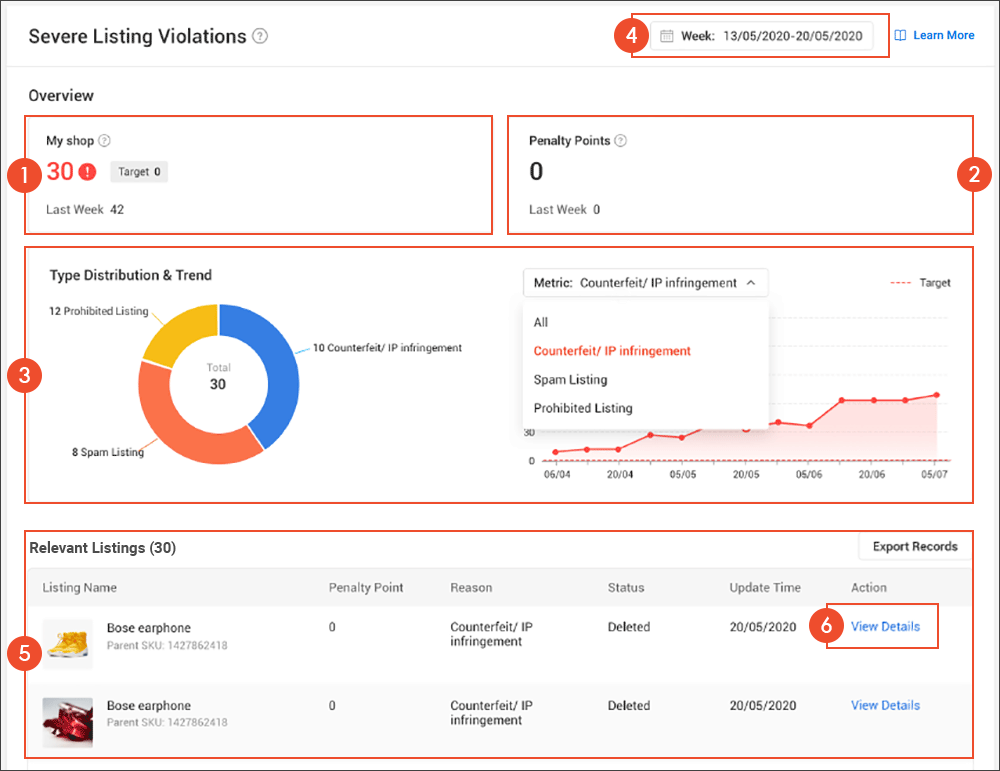
Evaluating advertising efficiency requires cross-analyzing CIR, ROAS, and total marketing expenses rather than tracking order volume alone. These three core metrics identify which ad formats utilize capital efficiently, which campaigns require scaling back, and the maximum spend threshold a store can sustain.
Comparative Efficiency Analysis Using CIR (Cost Income Ratio)
CIR measures the percentage of advertising spend required to generate 100 units of revenue; lower percentages reflect higher cost efficiency. When evaluating Search, Discovery, and Shop Ads, analyze their CIR metrics side-by-side rather than assessing each campaign in isolation.
For example, if Search Ads deliver a 12% CIR, Discovery Ads 18%, and Shop Ads 25%, Search Ads represent the most cost-effective budget use. However, do not rely solely on the lowest CIR tool; evaluate total order volume and absolute revenue to avoid favoring low-CIR campaigns that operate on minimal sales scale.
ROAS (Return on Ad Spend) Analysis
ROAS measures the revenue generated for every unit of currency spent on advertising. For instance, spending 1,000,000 VND to generate 5,000,000 VND in ad revenue yields a 5x ROAS. Side-by-side ROAS comparisons across ad formats highlight which traffic channels generate higher revenue relative to outlay.
However, a high ROAS does not automatically guarantee net profitability. A product burdened with high COGS and platform fees can operate at a loss despite strong ROAS figures. Cross-reference ROAS against profit margins and break-even CIR before scaling budgets.
Total Marketing Cost Control
Maintain strict visibility over storewide marketing spend across Search, Discovery, Shop Ads, and external promotional channels. Total ad outlay must remain within limits supported by overall product profit margins.
For instance, if a store generates 100,000,000 VND in revenue but retains only 15,000,000 VND in gross profit before advertising, spending 20,000,000 VND on marketing simply to inflate top-line revenue results in a net loss. Establish maximum spending limits based on net retained profit, reallocating funds to campaigns delivering favorable CIR and ROAS metrics while cutting ad spend on unprofitable campaigns.
Common Pitfalls Draining Shopee Seller Ads Budgets
Ineffective advertising performance rarely stems from high CPCs or large budgets alone; it primarily results from misallocated capital. The following three mistakes deplete ad budgets while obscuring which products or campaigns actually drive net revenue.
Equal Budget Distribution Across All SKUs
Products within a store do not possess equal conversion capabilities. Allocating equal ad spend across dozens of SKUs forces low-performing, poorly reviewed, or low-margin items to consume funds despite low conversion rates.
Identify core revenue-driving SKUs based on sales history, conversion rate, review scores, and margin profile, then prioritize budget allocation accordingly. For example, if 10 out of 50 store SKUs account for the majority of sales, concentrate 60–80% of the budget on those 10 items, leaving the remainder for new product testing.
Relying Entirely on Fully Automated Campaign Settings
Auto-selection settings simplify campaign setup, but topping up ad balances without active campaign management risks budget waste. Search trends, auction competition, and keyword efficiency fluctuate over time, causing previously profitable campaigns to lose efficiency.
Audit performance reports regularly, paying close attention to ad groups where spend increases without matching order growth. Adjust bids, reallocate budgets, or eliminate underperforming keywords and SKUs accordingly. Scale budgets exclusively for active campaigns delivering steady order volume and healthy CIRs.
Skipping Product Detail Page Optimization Before Ad Top-Ups
Failing to optimize product detail pages before scaling spend represents a common source of budget waste: ads successfully drive traffic, but the product page fails to convert. Unattractive thumbnails, uncompetitive pricing, scarce reviews, or vague descriptions cause visitors to bounce post-click.
Prioritize audits of main thumbnails, titles, pricing, shop vouchers, reviews, and descriptions before increasing ad budgets. If an ad campaign shows strong CTR but poor conversion, optimize the product landing page before raising CPC bids. Improving conversion rates yields more orders from existing click volume, lowering acquisition cost per order.
Contact Info
You need a Facebook advertising account but don’t know any reputable provider. Coming to Rentads is where you will experience what you need google ads account for rent prestige, high trust, and professional consulting and service support for customers.
Frequently Asked Questions
New stores should launch Search Ads for 3–5 competitively priced SKUs to target buyers actively searching with purchase intent, accelerating initial order generation.
No. Shopee separates placement mechanics: Search Ads charge only when users input keyword queries, while Discovery Ads charge when users browse product detail pages or homepage feeds. The two formats touch different buyer journey points without competing for the same cost event.

